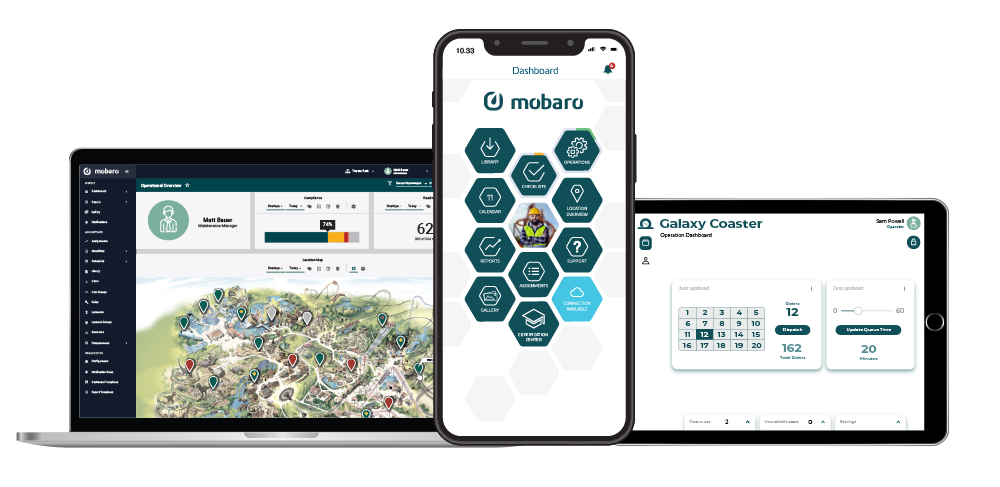



Real-time ride data only creates value when the right team can act on it.
In our previous article, we looked at how predictive maintenance can help amusement parks move from ride data to operational action. But what does that look like in practice?
That is where the collaboration between DMT RideGuard and Mobaro becomes concrete.
DMT RideGuard monitors the technical condition of rides through sensor-based, AI-supported analysis. Mobaro connects those findings to the maintenance workflows park teams use every day.
In short:
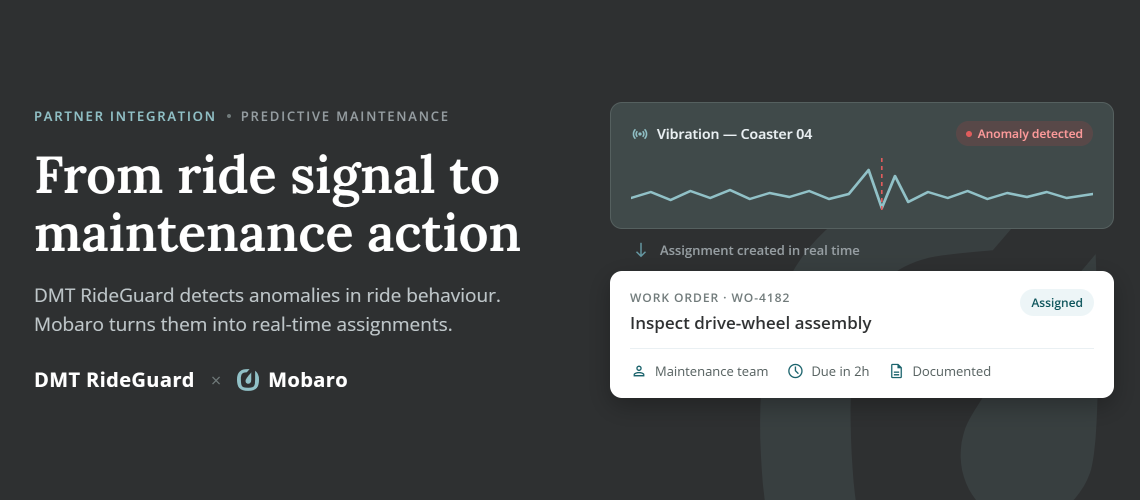
DMT RideGuard detects anomalies in ride behaviour. Mobaro turns those anomalies into real-time maintenance assignments.
For operators, this means ride condition data no longer sits isolated in a monitoring system. It becomes part of the operational process: assigned, followed up and documented in Mobaro.
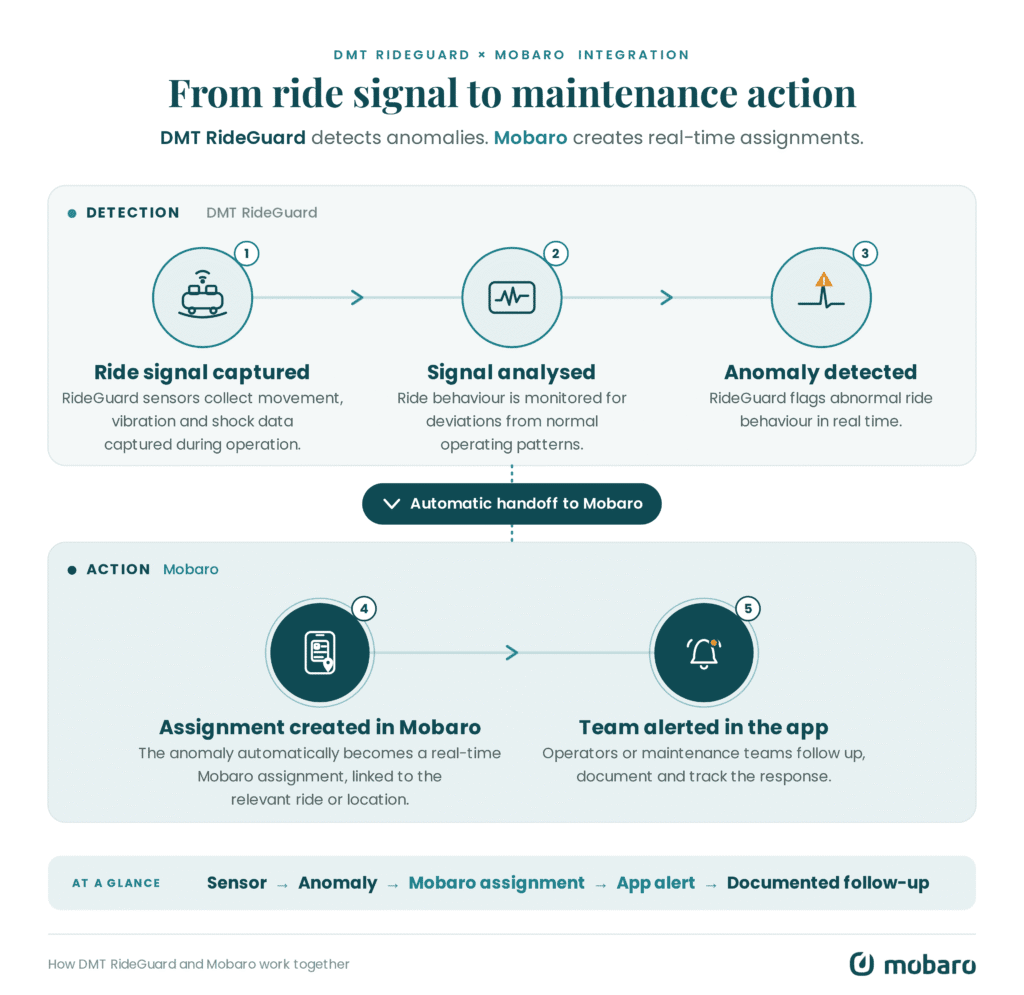
From ride signal to maintenance action: DMT RideGuard detects anomalies in ride behaviour, and Mobaro turns them into real-time assignments for follow-up and documentation.
Why the connection matters
Real-time ride data can give operators valuable insight into how a ride is behaving. But data alone does not improve maintenance. The value comes when a signal becomes something the team can act on quickly, consistently and with the right documentation in place. When an anomaly is detected, the maintenance team needs to know:
- What happened?
- Which ride is affected?
- Who needs to follow up?
- What action should be taken?
- Has the response been documented?
- Is the issue resolved?
Without that operational connection, ride monitoring risks becoming another standalone system. The collaboration between DMT RideGuard and Mobaro closes that gap by turning ride-level findings into actionable assignments.
How DMT RideGuard captures and analyses ride behaviour
DMT RideGuard uses IoT sensors installed directly on the ride to collect condition data during operation. The system monitors how the attraction behaves while it runs, giving operators a more continuous view of technical ride condition than manual observation or scheduled checks alone can provide.
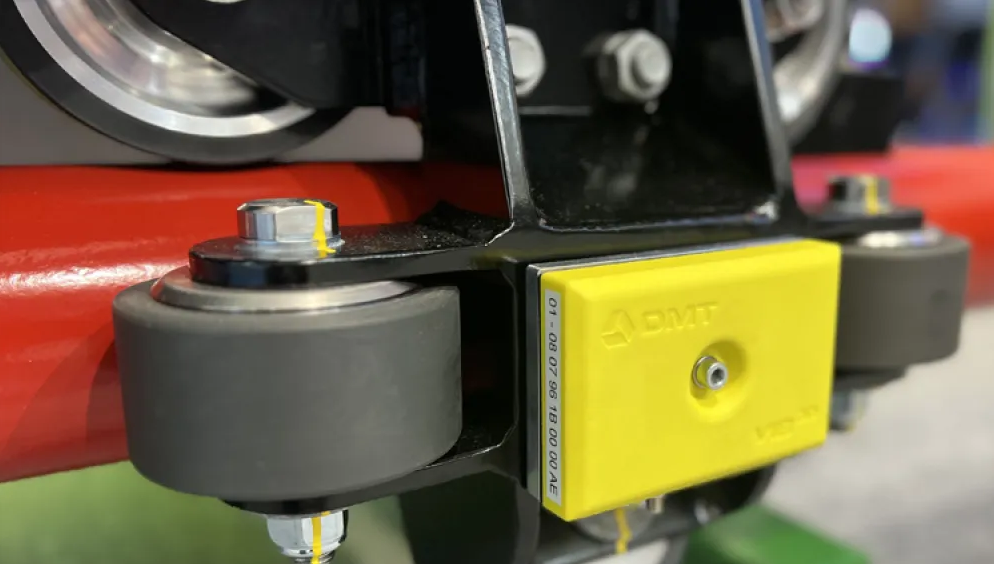
Once the data is collected, DMT RideGuard analyses the signal to identify deviations from normal ride behaviour. This can include irregular movement, vibration or shock patterns that may point to a maintenance need or require closer investigation. In this way, RideGuard becomes an early-warning layer for the maintenance team, helping operators identify when something may need attention before it becomes a larger operational issue.
See how DMT RideGuard monitors ride behaviour
To understand the value of the integration, it helps to see what happens at ride level.
DMT RideGuard shows how sensor-based monitoring can identify deviations in ride behaviour. Connected to Mobaro, those findings become part of the maintenance workflow.
How Mobaro turns anomalies into assignments
Detecting an anomaly is only part of the value. The next step is making sure the right team can act on it. When DMT RideGuard detects an anomaly, Mobaro automatically creates an assignment in real time. The finding does not stay locked in a separate monitoring system. It lands in the maintenance workflow the park team already uses. The assignment gives the team a structured way to follow up, document the response and track the action through to completion.
What this means for operators
For operators, the benefit is not simply more technical data.
It is a smoother path from early-warning signal to maintenance action.
The integration can help parks:
- Reduce manual effort in monitoring and follow-up
- Respond faster to irregularities
- Connect ride condition data with maintenance planning
- Improve visibility across teams
- Document actions and decisions in one place
- Support safer, more structured ride operations
As Maximilian Mairinger, Head of Experience & Events at Karls Erlebnis-Dorf, explains:
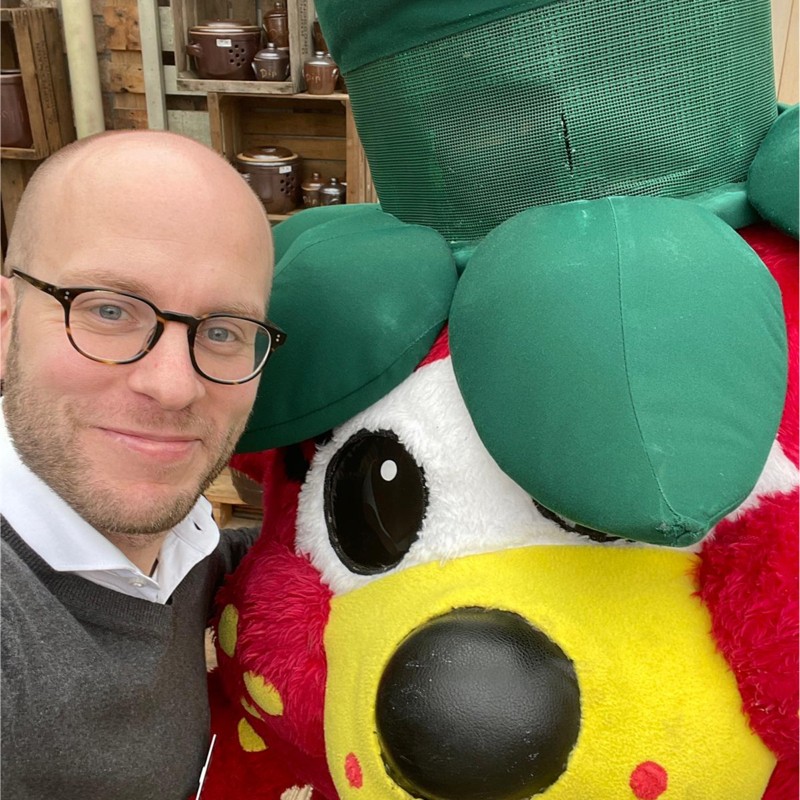
“For us as an operator, the safety of our guests is our top priority. With the integration of DMT RideGuard into the Mobaro software, we can seamlessly monitor the condition of our rides and save time and effort in monitoring and maintenance.”
From monitoring to documented action
Predictive maintenance is not only about spotting potential issues earlier. It is about making sure the right people can act on those signals in a clear, structured way.
That is the strength of connecting DMT RideGuard with Mobaro. DMT RideGuard helps operators understand what is happening on the ride. Mobaro helps make sure the right action follows. Together, they help amusement parks move from ride monitoring to real-time maintenance assignments and documented operational follow-up.
Want to see how Mobaro can help connect ride monitoring, maintenance workflows and operational documentation?















 EN
EN  ES
ES